Why Is My European Car Jerking When It Shifts?
Discover More On:
Car jerking when shifting can come from fluid pressure problems, a valve-body or mechatronic fault, clutch wear, software adaptation, or a driveline part outside the gearbox. An engine misfire can also feel like a shift problem. Our transmission repair and service starts with a road test, scan data, fluid checks, and an inspection before we recommend parts.
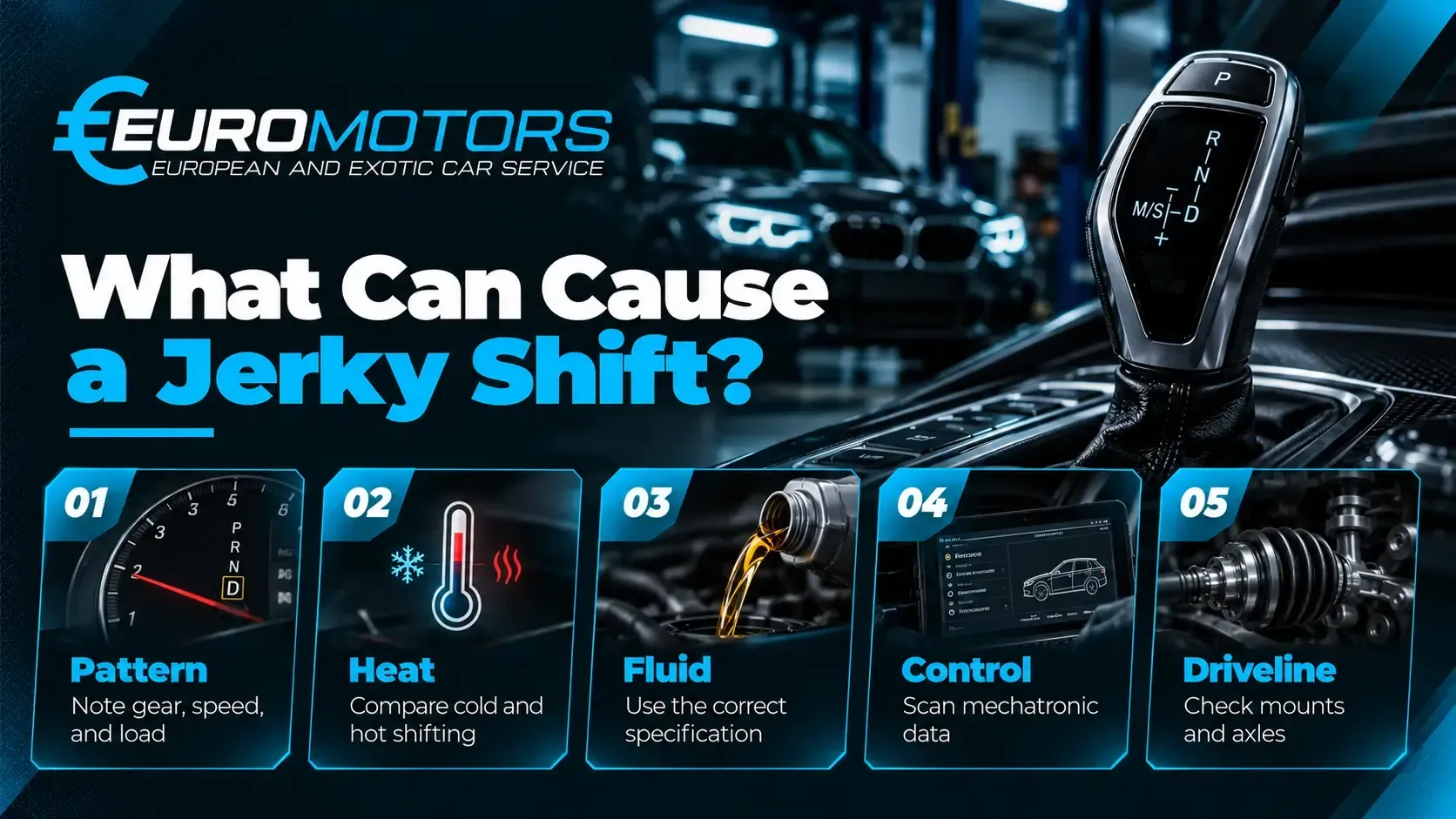
What Car Jerking When Shifting Can Mean
A jerk means power delivery changes abruptly as the vehicle selects or engages a gear. The symptom is useful, but the exact timing matters more than the word “jerk.”
The Exact Shift Pattern Matters
Note whether the problem occurs from Park to Drive, during one upshift, on a downshift, at low-speed takeoff, or while slowing to a stop. A shift that flares before engaging is different from an immediate bang. Temperature, throttle position, road speed, and warning lights further narrow the possibilities.
Gearbox Design Changes the Diagnosis
European vehicles may use a traditional automatic, dual-clutch, automated manual, continuously variable, or manual gearbox. Each controls torque and clutch engagement differently. A DSG shudder, automatic shift flare, and manual clutch judder require different tests.
Common Causes of Jerky Shifting
A hard-shifting transmission can have hydraulic, electronic, mechanical, or driveline causes. Diagnosis should confirm the system involved before a fluid service or internal repair is approved.
Incorrect, Low, or Degraded Transmission Fluid
Transmission fluid supports hydraulic pressure, clutch operation, cooling, and lubrication. Low level, contamination, age, or the wrong specification can change shift quality. Many European gearboxes use model-specific fluids and temperature-based fill procedures, so universal fluid or a simple top-off may create new problems.
Valve-Body, Mechatronic, or Solenoid Faults
The valve body and mechatronic system direct fluid pressure and clutch application. A sticking valve, pressure-control solenoid, sensor fault, or internal electrical issue can create harsh engagement, delayed shifts, or limp mode. Module data and pressure-related fault information help determine the next test.
Adaptation and Software Concerns
Transmission modules learn clutch fill times and pressure corrections on many platforms. Incorrect adaptations, low voltage, module faults, or incomplete service procedures may affect shifting. Resetting adaptations without diagnosis can erase useful information and worsen behavior.
Clutch, Torque Converter, or Internal Wear
Worn clutch packs, torque-converter problems, seals, bearings, or gear wear can create jerking, slipping, or shudder. A dual-clutch transmission shudder may involve clutch wear, fluid condition, mechatronics, or adaptations. On manual vehicles, our clutch repair and replacement process checks the hydraulics, clutch, and flywheel before recommending parts.
Mount, Axle, Driveshaft, or Differential Movement
A worn mount can allow the powertrain to move when torque changes. Axles, driveshaft joints, center supports, differentials, and transfer cases can also jerk during a shift. Our broader transmission and drivetrain service connects gearbox behavior with the rest of the power-delivery system.
Engine Hesitation That Feels Like a Shift Problem
An ignition misfire, fuel problem, air leak, or throttle concern may cause a stumble during a shift. RPM and engine data help separate torque loss from gearbox engagement. Our recent guide to rough idle and acceleration hesitation explains why engine faults need their own test path.
When Jerky Shifting Needs Immediate Attention
Jerky shifting becomes more urgent when the vehicle loses movement, enters limp mode, leaks fluid, or shows a warning paired with severe behavior. Continuing to drive can add heat or wear before the cause is known.
Warning Lights, Limp Mode, or Fluid Leaks
Reduce load and stop safely when a transmission warning appears with repeated banging, slipping, or limited gears. A large fluid leak or burning odor also calls for shutdown and towing. Fluid color alone does not confirm whether the leak comes from the transmission, engine, cooling system, or another component.
Delayed Engagement or Loss of Movement
A long delay before Drive or Reverse engages can point to pressure loss, control problems, or internal wear. Stop driving if the vehicle will not move normally, rolls unexpectedly, or repeatedly slams into gear. Do not keep shifting between ranges to test whether engagement returns.
What to Record Before a Diagnostic Visit
Clear symptom details help a technician reproduce the concern and compare it with system data. A short note or safe passenger-recorded video can preserve an intermittent pattern.
Note Temperature, Gear, Speed, and Throttle
Record whether the vehicle is cold or warm, which shift is involved, and whether the jerk occurs during light or heavy throttle. Mention recent battery work, service, warning messages, fluid spots, towing, or software updates.
Avoid Additives and Unverified Reset Procedures
Do not add universal transmission additives or perform an online reset procedure without confirming it applies to the exact gearbox. Additives can alter friction behavior, and a reset can remove learned values that help explain the concern. Avoid clearing fault codes before the diagnostic visit.
How We Diagnose a European Shift Concern
A useful diagnosis compares the driver's description with road-test behavior, module data, fluid condition, and physical inspection. The goal is to identify the failed system before discussing the repair scope.
Road Test, Scan Data, and Fluid Inspection
At Euro Motors, we document whether the concern appears hot or cold, under load, during one shift, or during range selection. We review faults, live data, supported adaptations, fluid condition, and leaks. A lift inspection can reveal mount, axle, driveshaft, differential, or transfer-case movement.
Platform-specific tools matter. For example, our Mercedes-Benz repair and service uses XENTRY-supported diagnostics where applicable to review transmission and related module data before quoting a repair.
Written Findings Before Repair Approval
The confirmed result may support fluid and filter service, a software or adaptation procedure, valve-body or mechatronic work, clutch repair, driveline service, or internal transmission repair. We provide documented findings and a written estimate before authorized work begins.
Florida drivers can also review motor vehicle repair rights from FDACS, including written-estimate options for repairs over $150 and approval requirements when costs exceed defined limits.
Orlando Driving Conditions and Shift Quality
Central Florida heat can expose fluid-related concerns after warm-up. Narcoossee Road and Lake Nona traffic create repeated low-speed clutch engagement. Merging onto SR 417 or SR 528 adds load that can expose slipping, flare, or shudder.
These roads do not diagnose the fault, but they help define the pattern. Drivers seeking transmission diagnostics in Orlando, FL, should note whether the jerk follows traffic, a highway merge, or the first shift of the morning.
Takeaways
A European car can jerk during shifts because of fluid condition, hydraulic control, mechatronics, adaptations, clutch wear, internal damage, mounts, axles, driveshafts, differentials, or engine hesitation. The exact gear, temperature, throttle position, and warning status guide the diagnostic plan.
Stop driving if you experience loss of movement, severe repeated engagement, limp mode, a large fluid leak, or a burning odor. Avoid additives, code clearing, and unverified resets before the vehicle is tested.
Frequently Asked Questions
Can I keep driving if my European car jerks when shifting?
You may be able to drive your European car briefly if the shifting jerk is mild, but continued driving is not always safe. Stop and arrange towing if you notice warning lights, leaks, burning odors, slipping, limp mode, violent engagement, or abnormal movement.
Does jerky shifting mean I need a new transmission?
No, jerky shifting does not automatically mean you need a new transmission. Fluid, adaptations, solenoids, mechatronics, clutches, mounts, axles, or engine faults may require a different repair.
Can old transmission fluid cause hard shifts?
Yes, degraded or incorrect fluid can contribute to hard shifts by affecting pressure, friction, cooling, and clutch operation. The specification, level procedure, history, and gearbox condition should be checked first.
Why does my car jerk more after it warms up?
Your car may jerk more when warm because fluid viscosity, pressure, clutch behavior, electrical resistance, or adaptations change with temperature. A hot-only pattern is useful evidence, but it does not confirm one failed part.
Can an engine problem feel like a transmission jerk?
Yes, a misfire, fuel problem, air leak, or throttle fault can interrupt torque during a shift. Comparing engine and transmission data helps identify which system changed first.
Schedule European Transmission Diagnostics in Orlando
Euro Motors can evaluate the shift pattern, scan the relevant modules, inspect fluid and leaks, and check related driveline components. Call (407) 730-5917 to schedule European transmission repair, or visit us at 6663 Narcoossee Rd, Suite 154, Orlando, FL 32822. We will explain the findings and written estimate before authorized work begins.

Sindy Munoz
I'm Sindy Munoz, founder and owner of Euro Motors, a women-owned European auto repair shop in Orlando, FL, that also handles exotic vehicles. Fourteen years ago, I walked into service centers knowing nothing about cars and was met with predatory practices and disrespect. I had known since I was sixteen that the industry overlooked, undervalued, and dismissed women. I wanted a shop where honesty was the standard, not a selling point.
Twenty-five technicians heard my pitch, and two joined. Banks turned me away. I started small, running mobile and borrowing corners in other shops, until, ten years ago, Euro Motors found a home of its own. We now cover Lake Nona and greater Orlando from two locations. My technicians are ASE and CARFAX certified and hold brand-specific OEM certifications. We handle engine diagnostics and service BMW, Mercedes-Benz, and Porsche vehicles using OEM parts and Motul fluids. No technician earns a commission, we recommend no repair without proof of necessity, and qualifying work carries a 3-year/36,000-mile nationwide warranty.
What began as one young girl's determination has grown into a community, and my vision now is bigger than ever: to expand Euro Motors into a network of shops where women, families, and communities feel welcome, valued, and empowered. This is more than a business. It's a movement to show that integrity, respect, and education can reshape an industry, one shop at a time.